Could Floating Solar Transform Global Energy Systems?
15/01/2026 -
By Jack Gawthrop, Commercial Manager, East Green Energy
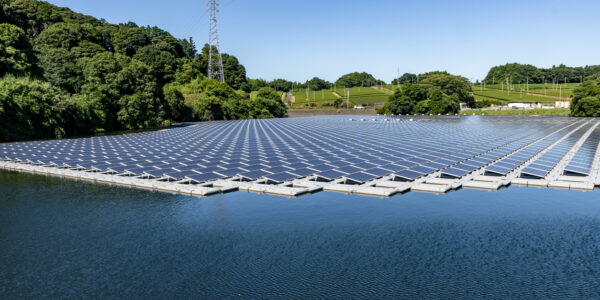
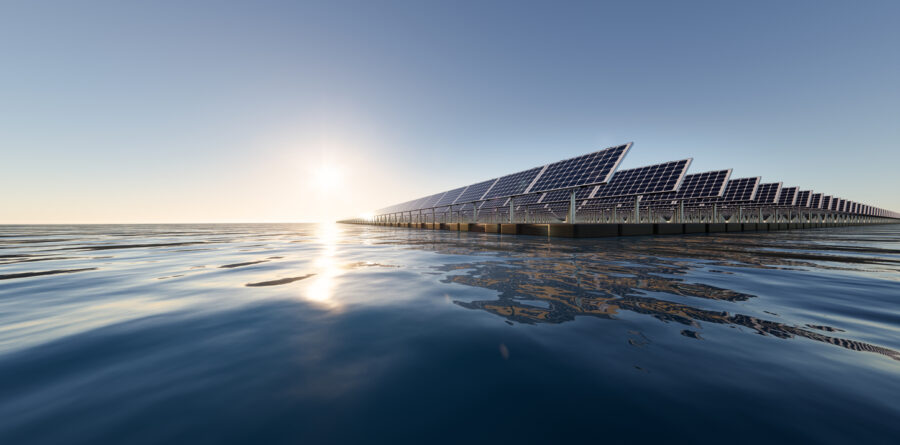
Floating solar has rapidly shifted from a niche concept to one of the most exciting areas of renewable energy innovation. With land use under increasing pressure and electricity demand continuing to climb, the idea of generating power on water is gaining real momentum. Researchers are now exploring a bold question: could floating solar eventually supply the full electricity needs of entire nations? Emerging international studies suggest that, for some countries, this may be within reach.
A significant study led by Bangor University, Lancaster University and the UK Centre for Ecology & Hydrology assessed nearly 68,000 lakes and reservoirs worldwide. Their modelling indicates that several nations could theoretically meet all of their electricity requirements through floating solar alone. On a global scale, the potential output exceeds 1,300 TWh annually — a figure that has helped propel floating solar into mainstream energy conversations.
The picture in the UK is more nuanced. While we lack the extensive reservoir systems seen in parts of Asia and don’t benefit from the same year‑round solar conditions as equatorial regions, the UK does have thousands of lakes, reservoirs and hydropower sites that remain largely untapped for solar generation. According to the British Hydropower Association, the UK already produces around 5.5 TWh of hydroelectricity across more than 1,600 schemes, many of which have existing grid connections that could support additional renewable technologies. Floating solar wouldn’t power the whole country, but it could play a valuable role in strengthening the national energy mix — particularly where land is scarce or heavily protected.
Performance is another part of the appeal. Solar panels operate more efficiently at lower temperatures, and water provides a naturally cooling environment that can enhance output. Floating systems also sidestep many of the land‑use challenges that affect ground‑mounted arrays, especially in areas where farming, food production and development all compete for space. In some cases, covering sections of a reservoir can even help reduce evaporation and protect banks from erosion — an added benefit for industries reliant on stored water.
Internationally, the technology is already well established. Countries including China, Japan, Indonesia and Italy have deployed floating solar at scale, installing large systems on industrial reservoirs, quarry lakes and water treatment facilities. The UK is earlier in its journey, but interest is rising quickly, particularly among sectors with high energy demand such as horticulture, food production and water‑intensive manufacturing.
So, could floating solar power entire nations? For a select few, the research suggests it’s possible. For many others, the UK included, it represents a compelling opportunity to expand renewable generation without increasing pressure on land. It won’t replace rooftop or ground‑mounted solar, but it offers a strong alternative where space is limited or planning constraints are tight.
As more organisations begin to assess the potential of their water assets, floating solar is set to become a far more familiar feature of the UK’s renewable landscape. The global evidence points in one direction: this is no longer an experimental technology, but a scalable, practical solution with the capacity to reshape how countries think about clean energy.
Contact East Green Energy about your next renewable project.
All articles on this news site are submitted by registered contributors of SuffolkWire. Find out how to subscribe and submit your stories here »