Floating Solar moves into the mainstream as water utilities face rising electricity costs
23/04/2026 -
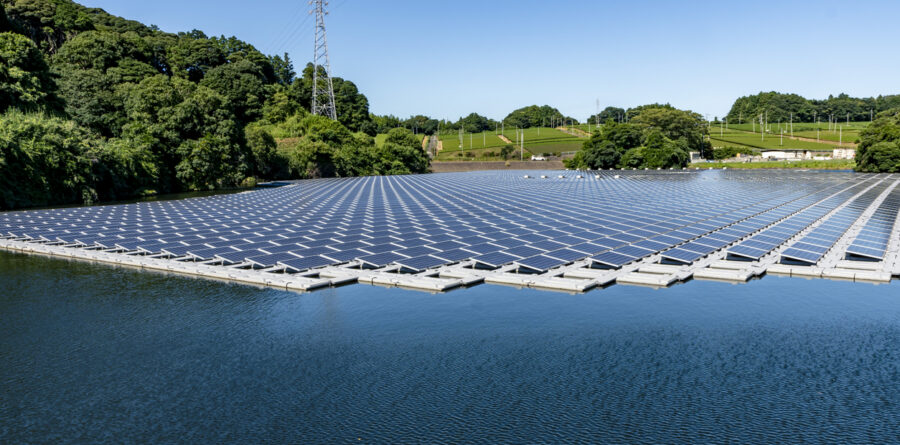
Floating solar is gaining momentum across the UK as utilities look for practical ways to expand renewable generation while working within increasingly tight land constraints. According to East Green Energy, which works closely with infrastructure owners across the utilities sector, water companies are feeling this pressure more than most.
Water utility sites consume large volumes of electricity, yet surrounding land is often protected, operationally sensitive or already allocated for other uses. Roof space rarely provides sufficient capacity to deliver meaningful generation, as large solar installations typically require acres rather than square metres. As a result, water surfaces are increasingly being viewed as a serious and scalable opportunity for clean energy production.
Jack Gawthrop, Commercial Director at East Green Energy, said the shift towards floating solar is being driven by a convergence of operational and economic pressures. “Water companies are under growing pressure to reduce energy costs, meet environmental targets and improve resilience, often at sites where land availability is extremely limited, floating solar allows them to open capacity at scale using assets they already own, without compromising operations or competing land uses.”
Rising energy demand, tighter environmental targets and the need for greater energy resilience are accelerating this shift. Reservoirs and treatment site lagoons offer large, stable surfaces capable of hosting significant solar capacity without competing with agriculture, housing or essential operational land. Floating solar systems also benefit from the natural cooling effect of water, which can improve panel efficiency and reduce thermal stress.
“For energy‑intensive operations that run continuously, even incremental performance gains become meaningful over time,” Jack added. “The cooling effect of floating systems is a real advantage and one that utilities are increasingly factoring into their long‑term energy strategies.”
The sector already has strong proof points. The Queen Elizabeth II Reservoir project, delivered by Lightsource BP, remains the largest floating solar installation in the UK. It demonstrated how large‑scale arrays can be engineered to withstand wind loading, wave action and long‑term anchoring requirements while integrating safely with existing reservoir operations. The project also showed that floating solar can be deployed at scale without affecting water quality or restricting site access.
Recent analysis from Water Magazine and the UK Solar Roadmap reinforces this direction of travel. The sector is being encouraged to make better use of existing water assets, particularly where land availability is limited or planning constraints make ground‑mounted solar difficult. Floating solar is highlighted as a means of accelerating decarbonisation, reducing exposure to volatile wholesale energy markets and supporting long‑term operational resilience. Additional benefits include reduced evaporation, lower algal growth and the potential for improved biodiversity outcomes.
Across the UK, the discussion is shifting from whether floating solar is viable to how quickly it can be deployed. As demand for renewable capacity continues to rise and land availability becomes more constrained, water bodies are increasingly being recognised as valuable energy assets rather than passive site features.
Jack continues, “Floating solar has moved beyond the pilot stage, we are now seeing serious interest in deployment at scale, particularly from utilities that need to expand renewable generation without expanding their land footprint. For many, floating solar is becoming a core part of the solution rather than a future option.”
To discuss a floating solar project with Jack, visit the East Green Energy website.
All articles on this news site are submitted by registered contributors of SuffolkWire. Find out how to subscribe and submit your stories here »